Platform Project
Sprih Supply Chain and Reporting Systems
Frontend architecture for reporting and supply chain workflows in a React monorepo.
- Year
- 2026
- Role
- Member of Technical Staff
- Focus
- Frontend architecture, Reporting systems, Supply chain dashboards, Performance optimization
- Tech
- React, TypeScript, Monorepo, RTK Query, Zod, jsonLogic, Playwright, Performance
Project overview
- Scope
- Reporting and supply chain modules across analytics and internal workflows.
- Problem
- The product had dense data flows, permissions, and form logic that needed to stay maintainable as modules expanded and reporting requirements grew.
- What I did
- Led frontend architecture and delivery across reporting and supply chain surfaces, introduced reusable hooks, schema-driven validation with Zod and jsonLogic, scalable RTK Query integrations, and Playwright coverage for critical flows.
- Impact
- Easier extension, safer releases, and a much lighter bundle.
Key outcomes
- Cut bundle size from roughly 7 MB to modular chunks
- Added Playwright coverage for critical flows
- Improved release confidence for dashboard workflows
Overview
This work sits inside a live production product, so the details here stay at the systems level rather than exposing internal implementation specifics. The core responsibility was owning frontend architecture and delivery for reporting and supply chain modules in a growing React monorepo.
What I worked on
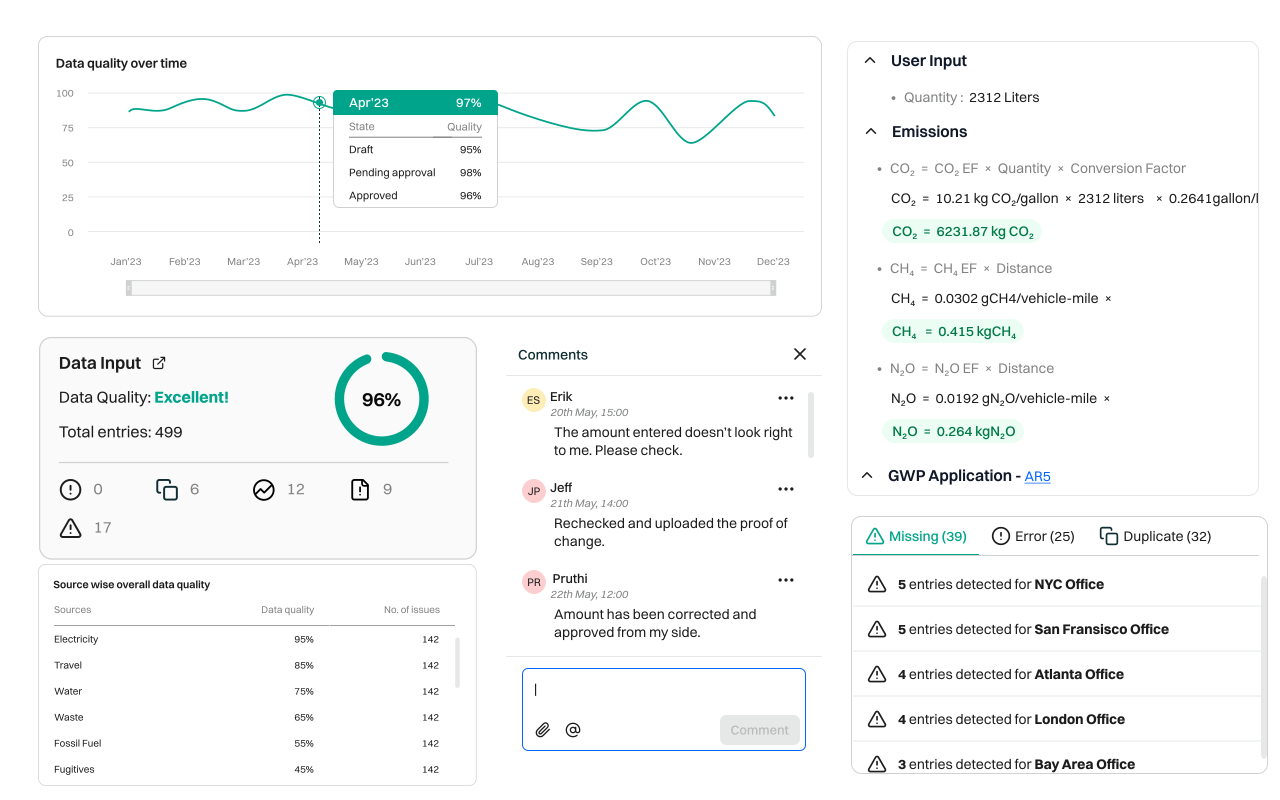
- Dashboard workflows for assignments, permissions, vendor analytics, and reporting.
- Reusable hooks and API integration patterns with Redux Toolkit and RTK Query.
- Schema-driven validation with Zod and jsonLogic for dynamic form flows.
- Playwright coverage for critical user paths.
- Bundle reduction through code splitting, lazy loading, and dependency cleanup.
Why this mattered
The product surface was getting more complex over time, which meant feature work had to stay fast without turning the frontend into a collection of one-off flows. The architectural work here was about keeping the system understandable while still shipping quickly.
Engineering notes
I also worked through cross-browser issues and improved observability with structured logging so bugs were easier to trace in production. That made the system more predictable to support, not just easier to demo.
Outcomes
- Improved maintainability of large reporting flows
- Enabled more scalable API integration patterns
- Increased release confidence with Playwright E2E coverage
- Improved load behavior through code splitting and dependency optimization